Decarbonising the North Sea How Emissions Are Falling Through Clean Energy and Carbon Capture
- 5 days ago
- 5 min read
The North Sea helped power Europe for half a century. Its oil and gas fields heated homes, fuelled transport and supported thousands of skilled jobs. Now the same region is becoming a testing ground for a different kind of energy system, one built around offshore wind, electrified platforms, hydrogen and carbon storage beneath the seabed.
That shift matters because the North Sea is both exposed to climate change and tied to its causes. Rising sea levels, stronger storms and changing marine conditions affect coasts from Scotland and eastern England to Norway, Denmark, Germany and the Netherlands. Cutting emissions here is not symbolic. It is a practical way to reduce one of Europe’s long-running carbon sources while building the infrastructure needed for a lower-carbon economy.

The North Sea still carries a heavy carbon footprint
The region’s emissions come from several sources. Oil and gas production remains the most visible. Offshore platforms use energy to drill, pump, process and move hydrocarbons. Many platforms still burn gas on site to generate power. Flaring, venting and methane leaks can add to the footprint, even when volumes are tightly regulated.
Emissions also come from shipping, port activity, refineries, petrochemical plants and heavy industry near the coast. In places such as Teesside, Humberside, Rotterdam and the Norwegian west coast, industrial clusters have grown around access to energy, ports and geological storage.
The wider climate impact is clear. Carbon dioxide stays in the atmosphere for a long time, trapping heat and driving global temperature rise. Methane has a shorter lifetime but a stronger warming effect in the near term. That makes North Sea decarbonisation a two-part task:
Reduce emissions from existing oil, gas and industrial activity
Replace high-carbon energy with clean power at scale
Neither part is simple. The North Sea is a working energy basin with ageing assets, harsh weather and complex ownership. Yet it also has major advantages: strong winds, skilled offshore supply chains, ports, pipelines and depleted reservoirs that can store carbon dioxide.
Offshore wind is changing the energy map
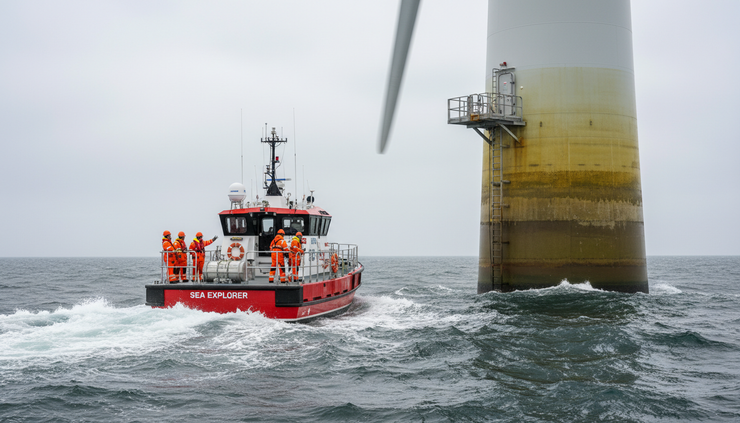
The clearest sign of change is offshore wind. The North Sea has some of the best wind resources in Europe: shallow waters in many areas, strong and steady wind speeds, and proximity to major power markets.
Projects such as Hornsea off the Yorkshire coast show how far the sector has moved. Hornsea One became one of the world’s largest operational offshore wind farms, supplying low-carbon electricity to the UK grid. Nearby projects are expanding the scale again, while Dogger Bank is being built in phases in one of the North Sea’s most promising wind zones.
These projects reduce carbon footprints in two ways. They generate electricity without burning fossil fuels, and they create the power source needed to electrify offshore platforms, ports and industrial processes.
Floating wind also matters. Hywind Scotland, off the coast of Aberdeenshire, proved that turbines can operate in deeper waters where fixed foundations are not suitable. That opens the door to new areas of the North Sea and beyond.
Carbon capture gives existing industry a route to cut emissions
Renewable energy can replace many fossil fuel uses, but some emissions are harder to remove. Cement, chemicals, hydrogen production and refining can release carbon dioxide as part of the process itself. This is where carbon capture and storage, often called CCS, becomes important.
CCS captures carbon dioxide from industrial sites, compresses it, transports it by pipeline or ship, and injects it into deep geological formations for long-term storage. The North Sea is well suited to this because it has depleted oil and gas fields, saline aquifers and decades of offshore engineering experience.
One of the best-known examples is Sleipner in Norway. Since the 1990s, carbon dioxide separated from natural gas has been injected into a deep saline formation beneath the North Sea. It is widely seen as a landmark project because it showed that offshore CO2 storage can work over long periods with monitoring.
Newer projects are trying to build whole carbon transport and storage networks. Norway’s Northern Lights project is designed to receive captured CO2 by ship and store it offshore. In the UK, plans linked to the East Coast Cluster and Acorn aim to connect industrial emitters to offshore storage sites. These projects are not just about one factory or one platform. They are about creating shared infrastructure so many emitters can cut emissions faster.
Case studies show what progress looks like
Hornsea offshore wind
Hornsea shows the value of scale. Large offshore wind farms can supply power to millions of homes, support port jobs and lower the carbon intensity of electricity. They also show how policy support and private investment can work together when long-term contracts reduce risk.
Hywind Scotland floating wind
Hywind Scotland proved floating turbines can operate in challenging offshore conditions. The project is small compared with fixed-bottom wind farms, but its importance lies in learning. Floating wind could help the North Sea use deeper waters and reduce pressure on crowded seabed areas.
Sleipner carbon storage
Sleipner remains a key CCS reference point. It links climate policy, geology and offshore engineering in one project. Norway’s carbon pricing helped make storage a rational choice, while monitoring built confidence in how injected CO2 behaves underground.

Policy is pushing the transition faster
Government policy shapes the pace of decarbonisation. Offshore wind grew because governments used seabed leasing, grid planning and contracts to cut investment risk. The UK’s Contracts for Difference scheme, for example, helped bring down offshore wind costs by giving developers more certainty over future revenues.
For oil and gas, rules on flaring, methane reporting and platform electrification are becoming more important. The UK’s North Sea Transition Deal set out a pathway for cutting production emissions while supporting offshore workers and supply chains. Norway has long used carbon pricing and strict offshore rules to reduce emissions from petroleum activity.
CCS also needs policy support because the business model is complex. Capturing carbon costs money, while the benefit is shared by society through lower emissions. That is why governments are funding clusters, designing carbon transport and storage licences, and linking projects to carbon markets or contracts.
Good policy also has to manage trade-offs. New cables, turbines and pipelines affect fishing, seabirds, marine habitats and coastal communities. Decarbonisation will only last if planning is fair, evidence-led and open to local voices.
The next phase is about connecting the pieces
The North Sea’s clean energy future will not come from one technology. It will come from systems that work together.
Offshore wind can power homes, electrolysers and platforms. Hydrogen can help decarbonise some industrial processes and heavy transport. CCS can deal with emissions that cannot easily be avoided. Reused pipelines and offshore skills can lower the cost of building new networks.
The challenge is coordination. Ports need upgrades. Grids need more capacity. Storage sites need permits. Workers need training routes from oil and gas into wind, CCS and hydrogen. Cross-border cooperation also matters because the North Sea is shared water. Electricity cables, CO2 shipping and storage networks will often cross national lines.

The North Sea’s story is changing from extraction to transition. Oil and gas will not disappear overnight, but emissions can fall as platforms clean up operations, renewable power expands and carbon storage networks grow.
The prize is bigger than lower numbers on an emissions chart. Decarbonising the North Sea can protect coastal communities, support skilled offshore work and help Europe cut its dependence on high-carbon energy. The region that once defined the fossil fuel age now has the tools to help build what comes next.